

Give every child a voice

Developed by nurse consultant, Kath Lancaster, and built using the Aire Innovate platform, The Lancaster Model is used by NHS 0-19 services, to give every child an opportunity to tell their health and wellbeing story. 

Digital health needs assessments feed into structured triage and an insight dashboard. It helps school nursing teams to cut through case loads and prioritise children needing intervention, while commissioners make better informed investment decisions.

‍Recognised in the 2026 Healthy Child Programme • HSJ Digital Award Winner • SCPHN Gold Standard

Book a demo
Watch the award-winning team
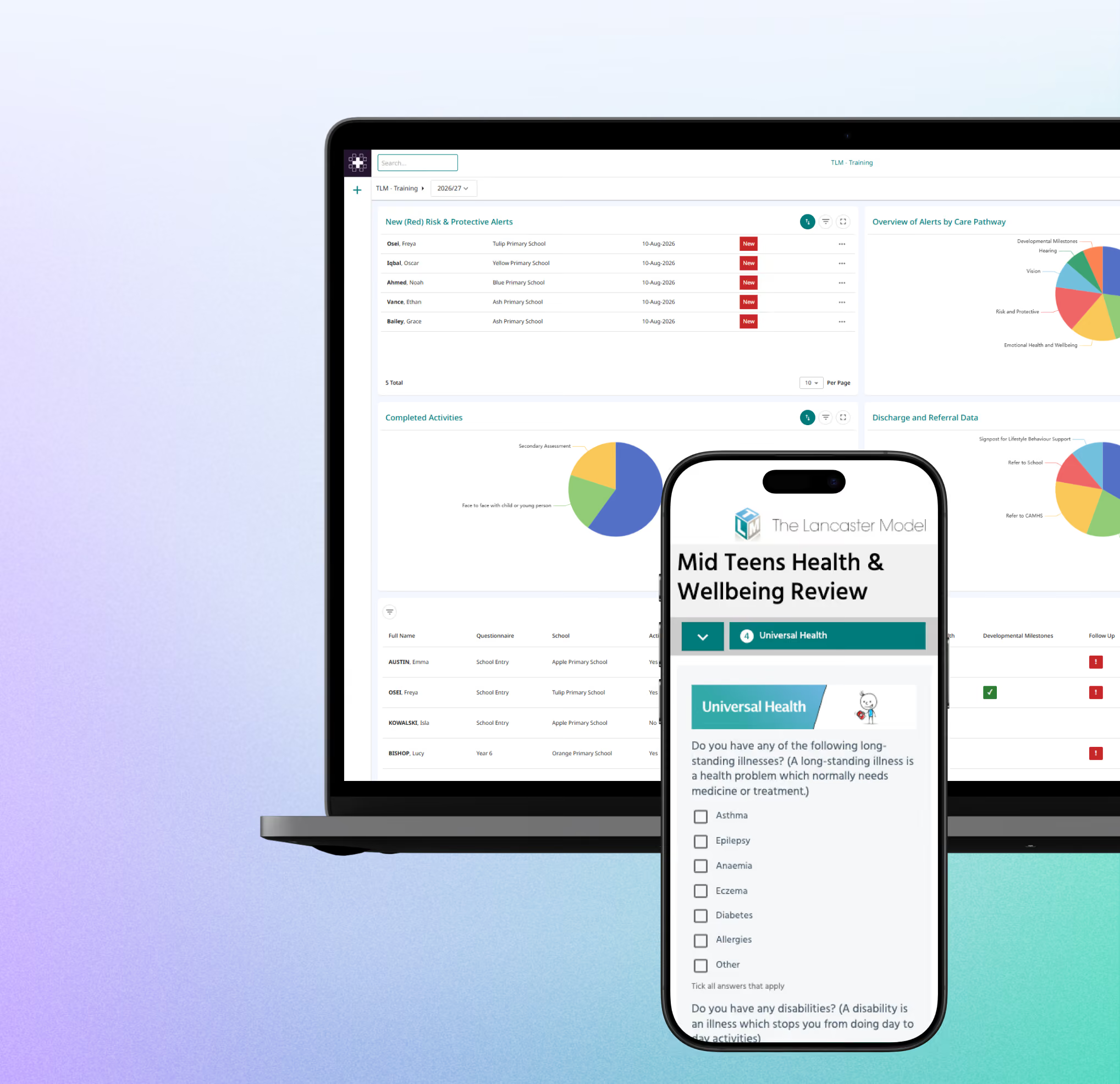
Laptop and smartphone displaying health and wellbeing review software for teens, showing risk alerts, pie charts, and a questionnaire about long-standing illnesses and disabilities.
75%
increase in engagement
100,000
alerts addressed sooner

Trusted by Organisations

Better informed services

See emerging needs across schools, communities and populations immediately.

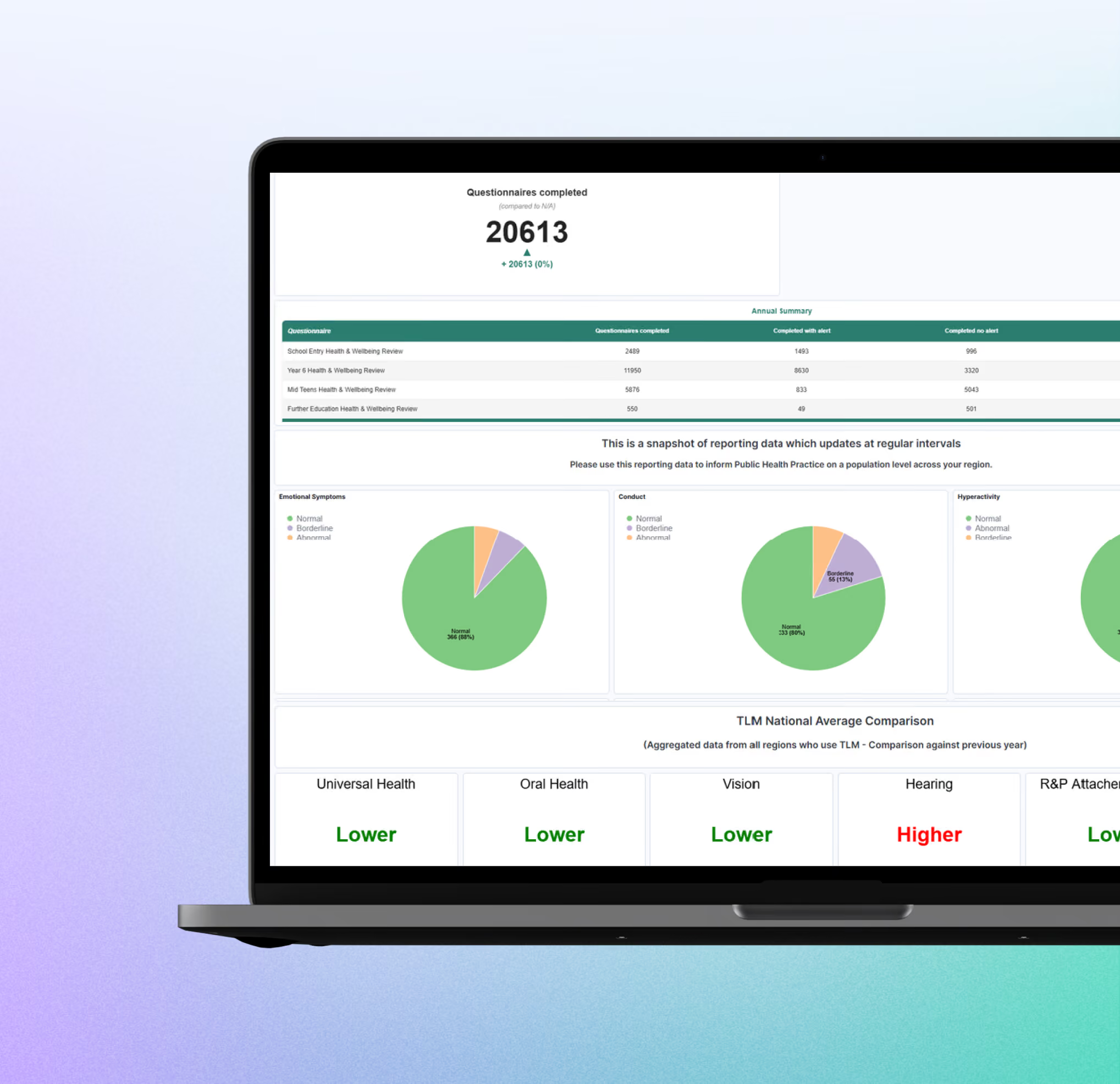
Interactive dashboards turn assessment responses into intelligence on health, wellbeing, inequalities and emerging needs. Live population data is aggregated and anonymised to give providers and commissioners actionable insights.

  • Monitor alerts, interventions, discharges, KPIs and outcomes.
  • Compare activity and outcomes across schools, cohorts and localities.
  • Give practitioners, service leads and senior managers a clear view of delivery, performance and emerging priorities.
  • Replace ad hoc feedback with population intelligence.
  • Identify inequalities and emerging unmet needs.
  • Build a stronger evidence base for service planning, prevention and investment.
Request a demo
Laptop screen displaying health data summary with questionnaires completed totaling 20,613, tables of health and wellbeing review counts, pie charts of emotional symptoms, conduct, and hyperactivity, and a national average comparison showing lower universal, oral, and vision health, but higher hearing issues.
National benchmark
School comparison
Regional trends
Clinical insight
Emerging needs

Find children who need help faster

Move from reactive to proactive support.

Turn what children tell you into earlier insight and clearer priorities. The Lancaster Model uses evidence based rules to highlight potential concerns as assessments are completed, helping school nursing teams prioritise follow-up, focus clinical time where it is needed most, and build a clearer picture of emerging needs across their population.

Instead of processing paper questionnaires, teams receive auditable actions and can record follow-up, referrals and outcomes in one secure place.

  • Prioritise concerning responses for rapid clinical review.
  • See each concern alongside the child’s response.
  • Compare results with national benchmarks.
  • Record follow-up actions, referrals and outcomes securely.
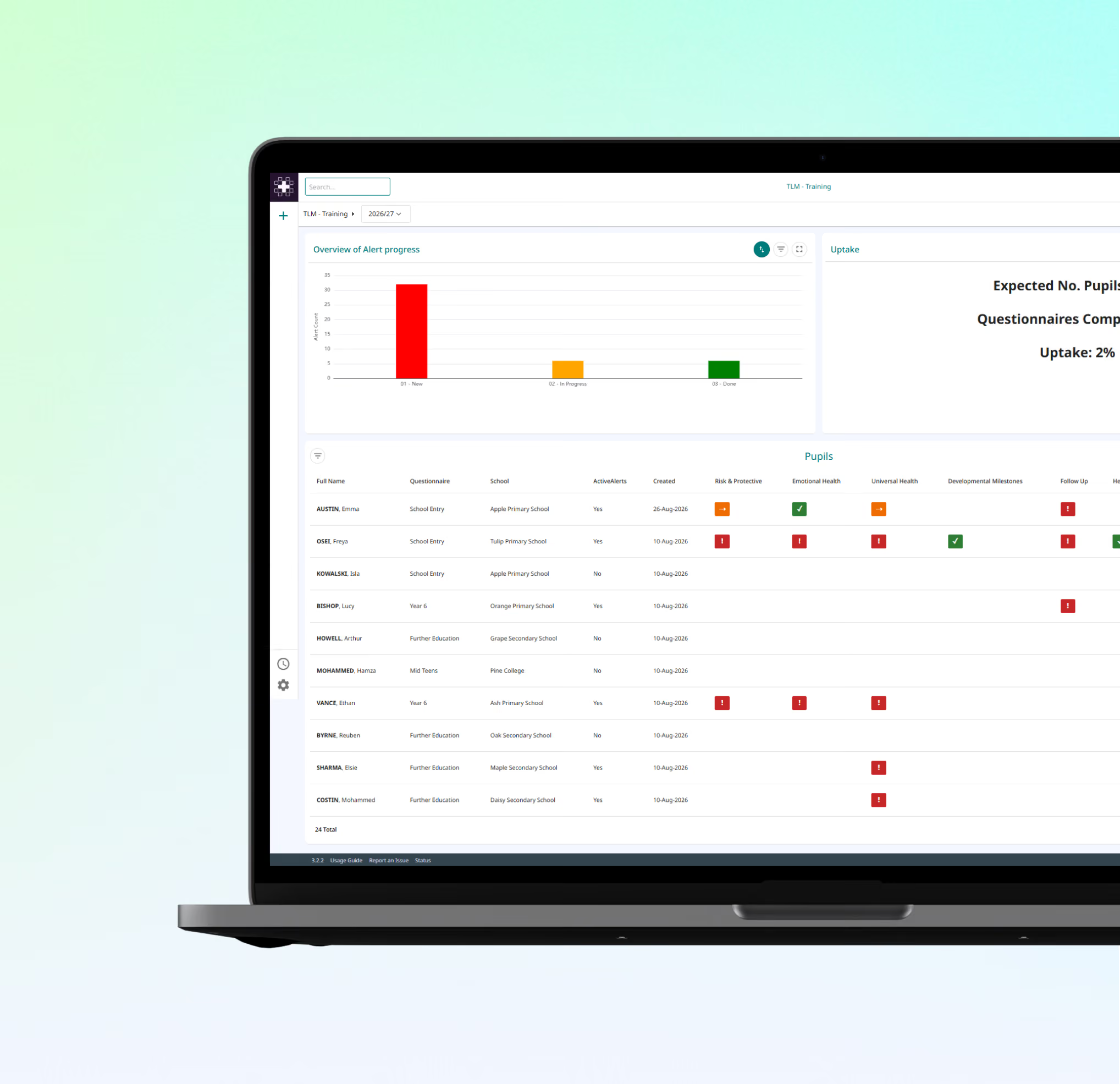
Laptop screen displaying a dashboard titled 'Overview of Alert progress' with a bar chart showing alert statuses in red, orange, and green, alongside a detailed table listing pupils' names, questionnaires, schools, acknowledgments, creation dates, risks, and various health indicators including emotional, universal, and developmental milestones.
Concern identified
100,000
alerts addressed sooner
National comparison
Response given
>75%
Action recorded

Designed around children

Better intelligence begins by hearing the voice of the child.

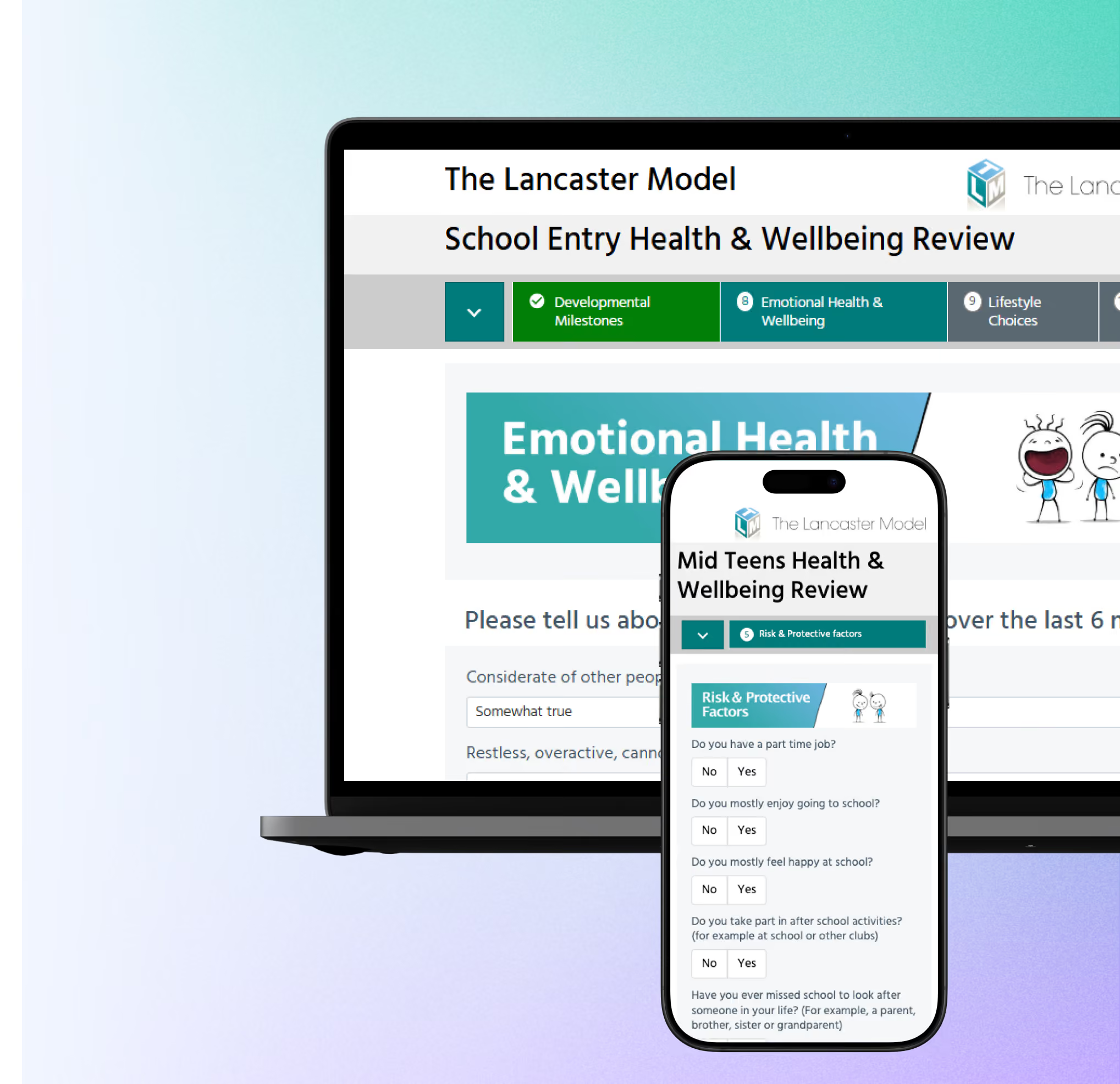
Children complete age-appropriate assessments on any device without a password. Clear language, tailored hints and intelligent questions make sensitive topics easier to understand and answer. Content is reviewed with expert groups to reflect children’s lives, from emotional wellbeing and self-harm, to gambling and safety.

  • Secure access without accounts, passwords, apps or barriers.
  • Age-appropriate wording with tailored, helpful prompts for children.
  • Relevant questions continually reviewed and shaped with clinical experts.
  • Accessible design that supports stronger completion rates across communities.
Request a demo
Laptop and smartphone displaying health and wellbeing review forms from The Lancaster Model; the laptop screen shows School Entry Health & Wellbeing Review with tabs including Developmental Milestones, Emotional Health & Wellbeing, and Lifestyle Choices; the phone screen shows Mid Teens Health & Wellbeing Review with questions about part-time jobs, school enjoyment, happiness, and after-school activities with Yes/No options.
No password
Age appropriate
Every voice heard
Secure by design
75%
Increase in engagement

A consistent voice throughout childhood

Age-appropriate health needs assessments at key stages from school readiness to adulthood.

School readiness

Completed with parents or carers before school entry. Builds an early picture of development, emotional wellbeing, sleep, toileting, safety and family support needs, so concerns can be addressed before they affect a child's start at school.

School entry

An age-appropriate review of health, development and school adjustment. It complements local screening and the National Child Measurement Programme, helping the school nursing team identify concerns, offer advice and arrange proportionate follow-up.

Year 6

Gives children their own voice before the move to secondary school. Questions explore physical and emotional health, relationships, bullying, safety, lifestyle and readiness for change, with flagged responses prioritised for review.

Year 10

Explores the issues becoming more prominent in adolescence, including emotional wellbeing, relationships, sexual health, substances, gambling, self-harm and safety. Results guide confidential support, targeted health promotion and earlier intervention.

Post 16

Supports the transition towards adulthood by exploring wellbeing, independence, relationships, risk, lifestyle and access to services. Young people can disclose concerns securely and receive information or follow-up appropriate to their needs.

SEND pathway

A flexible, accessible assessment for children and young people with special educational needs and disabilities, used at suitable transition points and adapted to communication needs. It helps teams understand the child’s wider context rather than relying on a standard age-based questionnaire alone.


Children across Derby have their voice heard. The evidence has directly changed practice. The team loves finding problems that no one knew about before, and spending time in school, getting back to what they love and were trained to do.

Susie Scales

Clinical Lead School Nurse

Proven in school health services

School health teams choose the Lancaster Model built on Aire Innovate to identify need, accelerate intervention and strengthen commissioning evidence.

Keep every action connected

Assessment insight becomes part of each child’s care pathway.

Aire Innovate connects digital health needs assessments with existing clinical systems using open standards including HL7, FHIR and REST APIs. Structured responses, alerts and actions can flow into established records and workflows, reducing duplicate entry and helping authorised professionals access current information within the systems they already use, securely without unnecessary duplication.

HL7 FHIR
HL7 v2
NHS Spine/PDS
MESH
SNOMED CT
ISO 27001
DCB0129
FHIR
HL7
REST APIs
HL7 FHIR
HL7 v2
NHS Spine/PDS
MESH
SNOMED CT
ISO 27001
DCB0129
FHIR
HL7
REST APIs

FAQs

Child health surveillance is the systematic collection and review of information about children’s health, development and wellbeing so that needs, inequalities and emerging risks can be identified. In modern 0–19 services, it should not mean passively watching data. Universal health needs assessments can give children a direct voice, trigger individual follow-up and provide anonymised population intelligence for planning and commissioning.

It means using consistent information to understand both an individual child’s needs and patterns across a population. School nursing teams may combine health needs assessments, professional judgement, screening information, service data and local intelligence. Digital assessments help make this information timely, structured and actionable, while safeguarding and clinical decisions remain with qualified professionals.

A school health needs assessment is a holistic review that helps identify a child or young person’s physical, emotional and social health needs. It is different from a single population screening programme. The 2026 Healthy Child Programme guidance says children and young people should be offered at least four individual health needs assessments, with universal, targeted or specialist support provided according to need.

The Lancaster Model, developed by nurse consultant Kath Lancaster, combines age-appropriate digital universal health needs assessments, automated prioritisation, case-management workflows and population dashboards. It helps school nursing teams identify concerns and act earlier, while giving commissioners anonymised evidence about needs, inequalities, demand and priorities across schools and regions.

The refreshed 2026 Healthy Child Programme guidance explicitly names the Lancaster Model as an example of an online screening tool supporting early identification and triage. The school nursing high-impact guidance also refers to digital health and wellbeing questionnaires, including the Lancaster Model, and describes it as an evidence-based tool that can inform targeted support.

Responses are analysed as soon as an assessment is submitted. Evidence-based rules flag potential concerns and help teams prioritise review, but do not replace clinical judgement. School nurses can see the issue, the child’s response, relevant benchmarking and recorded actions, enabling faster follow-up and a clear audit trail.

Anonymised dashboards replace isolated feedback with structured population intelligence. Commissioners can compare needs across schools and areas, spot inequalities and emerging issues, understand service demand, target limited resources and monitor whether provision reflects children’s changing needs. Local governance and disclosure controls determine how data is accessed and reported.

The platform is designed for NHS security, information governance and clinical safety requirements, with UK-based hosting, multi-factor authentication, role-based access and audit trails. The published specification should link to Aire Innovate’s current security and compliance evidence and explain local consent, confidentiality and safeguarding arrangements.

Yes. Aire Innovate uses open standards and APIs to connect forms, structured responses and workflows with existing systems. Integration scope depends on the local architecture and implementation. A discovery session maps identifiers, records, alerts, permissions and workflows before configuration.

Parents and carers can support sleep, nutrition, physical activity, oral health, immunisations, emotional wellbeing and regular attendance, while encouraging children to speak about worries. They should use trusted NHS advice and contact the school nursing team, GP or relevant service when concerned. This page is for commissioners and professionals, so link this answer to an appropriate local or NHS resource rather than offering individual clinical advice.

See it working in your service

A 20-minute walkthrough shaped around your population, pathways and priorities.

Book a demo